Full Year Activities Kids Planner Canva
Planning for a child’s growth, routines, and emotional development doesn’t have to mean juggling dozens of mismatched printables or spending hours designing from scratch. The Full Year Activities Kids Planner Canva is a thoughtfully structured, ready-to-use digital resource—designed specifically for caregivers, educators, and homeschooling families who value intentionality without the overhead. It’s not just another calendar or checklist; it’s a cohesive, developmentally aware toolkit that supports consistency, self-expression, and gentle responsibility-building across 12 months.
A Planner Built for Real Life With Kids
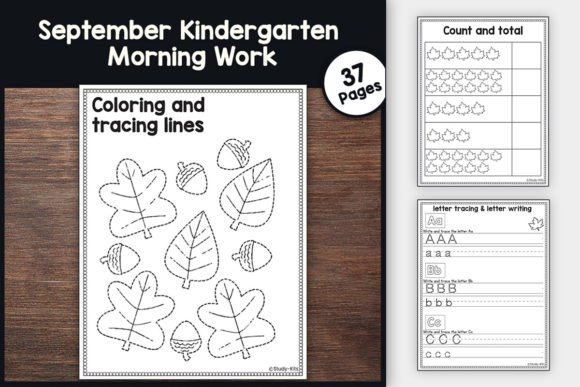
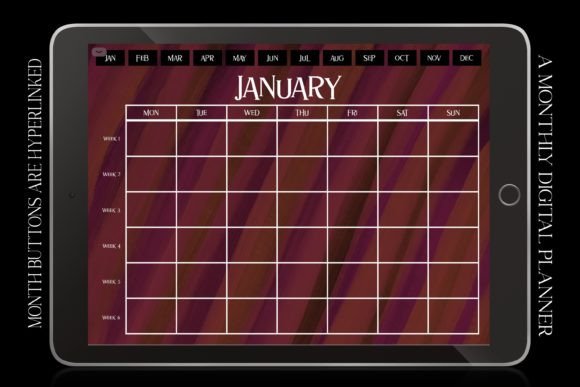
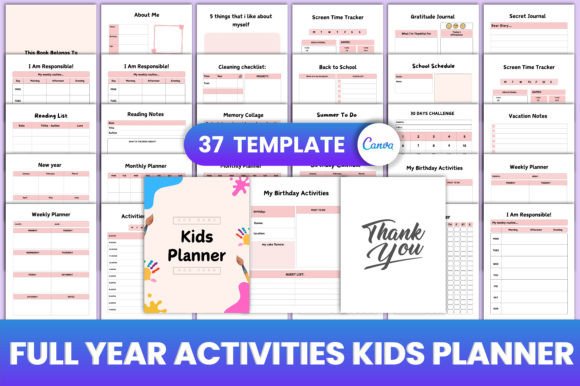
What sets this planner apart is its balance of structure and flexibility. At 37 pages (8.5×11 inches, 300 DPI, no bleed), every section serves a clear purpose—and avoids redundancy. You’ll find two versions of key spreads—like Monthly Planner, Weekly Planner, Habit Tracker, and Screen Time Tracker—not as filler, but to accommodate different rhythms: one page for visual thinkers, another for detail-oriented planners; one for weekly review, another for daily preview. This intentional duplication reflects how children engage differently across contexts and moods.
The Full Year Activities Kids Planner Canva Interior is fully editable in Canva using a free account—no design experience needed. Swap fonts, adjust colors, add stickers, or translate labels into another language. That means you’re not locked into someone else’s aesthetic or assumptions. A bilingual family can label “Gratitude Journal” in both English and Spanish. A neurodivergent child’s caregiver might simplify wording on the “I Am Responsible” page or enlarge checkboxes on the Cleaning Checklist. Customization isn’t an afterthought—it’s built into the workflow.
Where This Planner Makes a Tangible Difference
For busy parents managing transitions: Pages like “First Day of New Home,” “New Country,” and “Back to School” aren’t decorative—they’re grounding tools during high-stress change. Instead of relying on verbal reassurance alone, a child can draw their new room on the “Memory Collage” page or list three things they noticed on their “First Day Of New Home.” These prompts reduce anxiety by giving concrete ways to process big shifts.
For educators and therapists: The “I Am Feeling” and “Secret Journal” pages offer low-pressure entry points for emotional literacy. Unlike open-ended journaling—which can overwhelm younger kids—the structured prompts (“Today I felt ___ because ___”) scaffold reflection. Paired with the “Gratitude Journal” and “My Favorite Moments,” these sections support social-emotional learning goals without requiring extra lesson prep.
For homeschoolers and summer learning advocates: The “Summer To Do,” “30 Days Challenge,” and “Reading Notes” spreads integrate skill-building into everyday life. A child tracking screen time across two layouts can compare patterns week-to-week, then co-create a plan with a parent—turning data into dialogue. Similarly, “Vacation Notes” invites observation and storytelling, reinforcing writing stamina and memory recall far more effectively than generic worksheets.
Practical Output That Works Where You Do
You’ll receive more than just a Canva link. Alongside the editable template, you get high-resolution PDF, JPEG, and PNG files—ready for printing, sharing via email, or uploading to learning platforms. The PDF is optimized for crisp home printing (no blurry text or misaligned grids), while the PNGs work seamlessly in digital classrooms or therapy apps that accept image-based activities. All files maintain the original 300 DPI quality, so nothing degrades when zoomed or projected.
This matters most when consistency is non-negotiable: a special educator printing weekly planners for five students, a librarian distributing summer reading trackers to 30 families, or a therapist emailing a “Feeling Check-In” sheet before each session. Having reliable, professional-grade assets eliminates last-minute formatting fixes or compatibility headaches.
Who Benefits Most—and When to Look Elsewhere
This planner shines for adults supporting children aged 6–12 who are developing executive function, emotional vocabulary, and personal agency. It’s especially valuable for those who already use Canva (for newsletters, classroom visuals, or client-facing materials) and want to extend that workflow into family or student planning.
That said, it’s not designed for toddlers needing tactile elements (e.g., wipe-clean surfaces or sticker-based tasks), nor for teens seeking minimalist, bullet-journal-style layouts. If your priority is deep academic goal-setting—like long-term project milestones or standardized test prep—it complements but doesn’t replace subject-specific tools. And while the Canva link grants full editing access, users without stable internet won’t be able to edit live—though downloaded PDFs remain fully usable offline.
Small Details That Add Up
Notice the thoughtful sequencing: “This Book Belongs To” opens the planner—not as branding, but as a subtle ownership cue for the child. “5 Things I Like About Myself” appears early, reinforcing identity before diving into tasks. Even the “Thank You” page at the end models gratitude as closure, not an afterthought. These aren’t decorative touches; they’re quiet invitations to belonging and self-worth.
The “Cleaning Checklist” avoids vague directives (“Clean your room”) in favor of observable actions (“Put toys in the blue bin,” “Make bed with smooth sheets”). That specificity helps children understand expectations—and builds confidence through achievable wins. Likewise, “School Schedule” includes space for photos or icons, making routines accessible for pre-readers or visual learners.
Getting Started Is Simpler Than You Think
No subscriptions. No hidden fees. Just one download, one Canva login (free), and immediate access to all 37 pages—including interior spreads designed to flow naturally from January through December. Because it’s built in Canva, updates take seconds: change a date, swap an icon, or duplicate a page for a sibling. And since the PDF and image files are print-ready, there’s no waiting for software conversions or troubleshooting margins.
If you’ve ever spent 45 minutes searching for “kids habit tracker printable” only to find watermarked, low-res files—or tried adapting adult planners that assume abstract time management skills—you’ll recognize the relief of having one coherent, age-appropriate system. The Full Year Activities Kids Planner Canva doesn’t promise perfection. It offers clarity, adaptability, and respect—for the child’s voice, the adult’s time, and the real, uneven, joyful work of growing up.