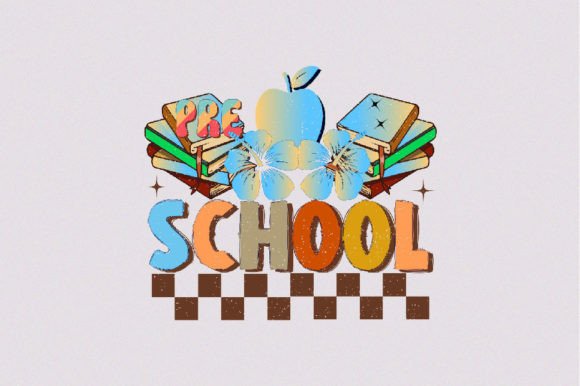
Pre School: Hand-Drawn Retro Back-to-School Sublimation Designs That Actually Fit Real Life
If you’ve ever spent 45 minutes searching for a sublimation design that feels warm, nostalgic, and classroom-ready—not generic, not overdesigned, not stuck in 2012—you know how rare it is to find something that lands just right. Pre School isn’t another AI-generated collage of clipart apples and cartoon backpacks. It’s a small, intentional collection of retro back-to-school illustrations drawn by hand first—then carefully digitized, cleaned, and optimized for real-world use.
That hand-drawn origin matters. You’ll see it in the slight wobble of a chalkboard border, the uneven thickness of a crayon-style “ABC” banner, or the gentle imperfection of a smiling sun with hand-sketched rays. These aren’t sterile vectors—they’re friendly, approachable, and quietly confident in their simplicity. And because they were built for function—not just aesthetics—they come ready to drop into your workflow: high-resolution PNGs (300 DPI), transparent backgrounds, cleanly separated files, and one tidy ZIP to download and go.
Where This Fits—Without Forcing It
Think about your last school-related project. Was it for your own child’s first-day shirt? A teacher’s welcome banner for her kindergarten door? A boutique owner printing tote bags for a local “Back to Learn” pop-up? Or maybe a blogger designing a printable calendar for homeschool families? Pre School works in all those places—not because it tries to be everything, but because it stays grounded in what people actually need: clarity, charm, and compatibility.
A freelance designer prepping a client’s back-to-school social media kit might grab the “Retro ABC Blocks” PNG to layer over a soft gradient background—no clipping masks needed, thanks to the clean transparency. A small-batch apparel seller can import the “Chalkboard + Crayons” motif directly into their sublimation software, resize it for toddler tees or adult crewnecks, and print without pixelation or edge halos. Even educators building a low-cost classroom toolkit use these files: paste them into Canva to make editable name tags, print them on cardstock for reward stickers, or scale them up for laminated center signs.
Real Uses—Not Just “Possible” Ones
- Teachers & Homeschoolers: Print the “My First Day” badge onto sticker paper, cut it out, and hand it to each student—no design software required. Use the “Rainbow Pencil Cup” graphic as a visual cue on storage bins or supply lists.
- Small Business Owners: A craft studio selling personalized pencil cases uses the “Vintage School Bus” design to create limited-run sublimated pouches. The transparent background means it wraps cleanly around curved surfaces—and the retro palette (mustard, teal, brick red) matches their existing brand colors without tweaking.
- Bloggers & Content Creators: One parenting blogger embedded the “Notebook + Apple” icon into her free downloadable “First Week Checklist” PDF. Readers recognized the warmth instantly—it felt handmade, not stock. Downloads jumped 30% that month.
- Event Planners & Party Hosts: Instead of paying for custom-printed party tags, they dropped the “Crayon Box” design into a mail-merge template, added names, and printed on kraft cardstock. Guests said the tags looked “like something my kid drew”—in the best possible way.
Why “Retro” Works—When Done Right
Retro isn’t about nostalgia for its own sake. It’s shorthand for trust, familiarity, and human touch—especially in spaces where authenticity matters. In early education, where emotional safety and visual calm are part of the curriculum, a slightly imperfect, hand-sketched line reads as caring. A bold, uncluttered font paired with a soft watercolor wash says “this is for little hands and growing minds,” not “this is for algorithmic engagement.”
That intention shows up in how the files behave, too. No overlapping layers. No hidden raster effects. Each PNG is isolated—so if you only need the “Backpack Outline” for a minimalist poster, you don’t have to delete five other elements first. If you’re sublimating onto light-colored ceramic mugs, the black-and-white versions hold crisp detail at any size. If you’re printing on pastel stationery, the transparent background lets your paper color shine through naturally—no white boxes or forced contrast.
What to Keep in Mind Before You Download
These designs are intentionally simple—not minimal to the point of emptiness, but focused. They won’t replace complex illustration work for a full book cover or animated explainer video. But if you need to ship a batch of custom T-shirts for a preschool open house next Tuesday? Or finish a set of editable parent newsletter headers before your 9 a.m. team meeting? That’s where Pre School saves time without sacrificing tone.
Also worth noting: the retro palette leans warm and earthy—not neon or hyper-saturated. That makes it easy to pair with natural textures (linen, kraft paper, woodgrain) and accessible for users who prioritize color contrast. If your project requires ADA-compliant text overlays, the clean outlines and generous spacing give you room to add legible type without crowding.
How It Fits Into Your Broader Toolkit
You probably already use Canva, Cricut Design Space, Silhouette Studio, or Adobe Express. Pre School slots in without friction. Drop a PNG into any of those platforms, resize it, recolor it (if needed—the grayscale versions take color fills beautifully), and export. No plugins. No learning curve. No licensing surprises—these are yours to use commercially, across unlimited personal and client projects.
It’s also a quiet confidence-builder for beginners. If you’re new to sublimation, starting with a well-structured, professionally prepped file means less troubleshooting and more making. You’ll spend less time fixing anti-aliasing and more time testing ink settings, adjusting pressure, or deciding whether that “Chalkboard Alphabet” looks better centered or off-kilter on a notebook cover.
In short: Pre School doesn’t ask you to change how you work. It meets you where you are—with a sketchbook sensibility, digital readiness, and the kind of quiet usefulness that makes creative work feel lighter, not louder.