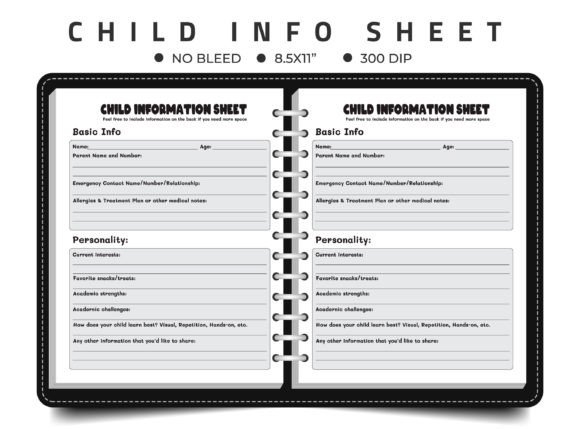
Child Info Sheet for the First Day of School
The Child Info Sheet for the First Day of School is a practical and essential tool designed to streamline the onboarding process for new students. This document serves as a centralized resource for collecting and organizing critical information about each child, ensuring that teachers, parents, and school administrators have access to all necessary details from the very beginning of the academic year.
Whether you're a teacher preparing for the first day of classes or a parent looking to support your child's transition into a new educational environment, the Child Info Sheet offers a structured way to gather important data. It includes sections for student details, emergency contacts, health information, and other relevant forms of communication. By using this sheet, schools can create a more organized and efficient start to the school year, reducing the risk of miscommunication or overlooked information.
Why Would Someone Be Interested in the Child Info Sheet?
For educators, the Child Info Sheet provides an easy-to-use template that helps maintain accurate records for each student. It ensures that vital information such as allergies, medical needs, and special instructions are clearly documented, allowing teachers to provide appropriate care and support. For parents, it offers peace of mind by enabling them to share essential details with the school in one place, making it easier for everyone involved to stay informed.
Additionally, the Child Info Sheet supports the broader goal of creating a welcoming and inclusive learning environment. By having all necessary information readily available, teachers can better understand each student’s unique needs and tailor their approach accordingly. This proactive method helps build trust between families and the school community, setting a positive tone for the entire academic journey.
Benefits of Using the Child Info Sheet
One of the primary benefits of the Child Info Sheet is its ability to simplify the first-day experience for both students and staff. With all required information consolidated into a single document, there is less chance of confusion or errors during the initial setup. This efficiency saves time and effort, allowing teachers to focus on what matters most—teaching and engaging with their students.
Another advantage is the ease of customization. The Child Info Sheet can be adapted to fit the specific needs of different schools or educational programs. Whether it's for a traditional classroom setting or a specialized learning environment, the flexibility of this document makes it a valuable asset for any educational institution.
Furthermore, the Child Info Sheet promotes transparency and collaboration between parents and teachers. By providing a clear overview of each child’s information, it encourages open communication and helps establish a strong foundation for ongoing dialogue throughout the school year.
Considerations and Tradeoffs
While the Child Info Sheet offers numerous benefits, it is important to consider potential tradeoffs. One consideration is the need for consistent updates and maintenance. As students grow and their needs change, the information collected on the sheet should be reviewed regularly to ensure accuracy. This requires a commitment to ongoing documentation and management.
Additionally, the use of the Child Info Sheet may involve some level of data privacy and security. Schools must ensure that all collected information is stored securely and only accessed by authorized personnel. This responsibility highlights the importance of following proper data protection protocols and maintaining confidentiality at all times.
Situations Where the Child Info Sheet May Be a Strong Fit
The Child Info Sheet is particularly well-suited for new students transitioning into a school environment. It is especially useful for younger learners who may not yet be familiar with the expectations of the school system. By having all necessary information readily available, teachers can quickly address any concerns and provide a supportive atmosphere for the child’s learning experience.
It is also beneficial in situations where multiple stakeholders are involved in a child’s education, such as when a child has special needs or requires additional support. The Child Info Sheet allows for comprehensive documentation of these requirements, ensuring that all parties are aligned in their approach to the child’s development and well-being.
When Alternatives May Be Worth Considering
While the Child Info Sheet is a valuable tool, there may be instances where alternative solutions are more appropriate. For example, digital platforms that offer online forms and databases can provide greater accessibility and ease of use, especially for larger schools or those with diverse student populations. These platforms often allow for real-time updates and secure sharing of information, which can enhance communication and efficiency.
However, it is important to weigh the pros and cons of each option. While digital tools offer convenience, they may require additional training and investment in technology infrastructure. In contrast, the Child Info Sheet remains a reliable and straightforward solution that does not rely on digital systems, making it accessible even in settings with limited technological resources.
Decision-Making Insights
When deciding whether to use the Child Info Sheet, it is crucial to evaluate the specific needs of your school or educational program. Consider factors such as the size of the student population, the level of technological integration, and the availability of resources for documentation and management. If simplicity and reliability are your priorities, the Child Info Sheet may be the best choice.
Ultimately, the goal is to create an environment where every child feels supported and prepared for their educational journey. By choosing the right tools and resources, such as the Child Info Sheet, you can set the stage for a successful and seamless start to the school year.